Built the Old-Fashioned Way Why Our Name Matters and Quality Always Wins
There’s something about doing things the old-fashioned way that still means something to me. Not because I’m against change. Not because I think everything was better “back then.”
But because some things simply shouldn’t be rushed.
Quality. Integrity. Craftsmanship. Keeping your word. Taking pride in what carries your name.
Those values never go out of style.
And the more businesses our family builds, the more I realize they’re at the heart of almost everything we do.

If our name is on it, it matters
A name is more than a label. It is a promise.
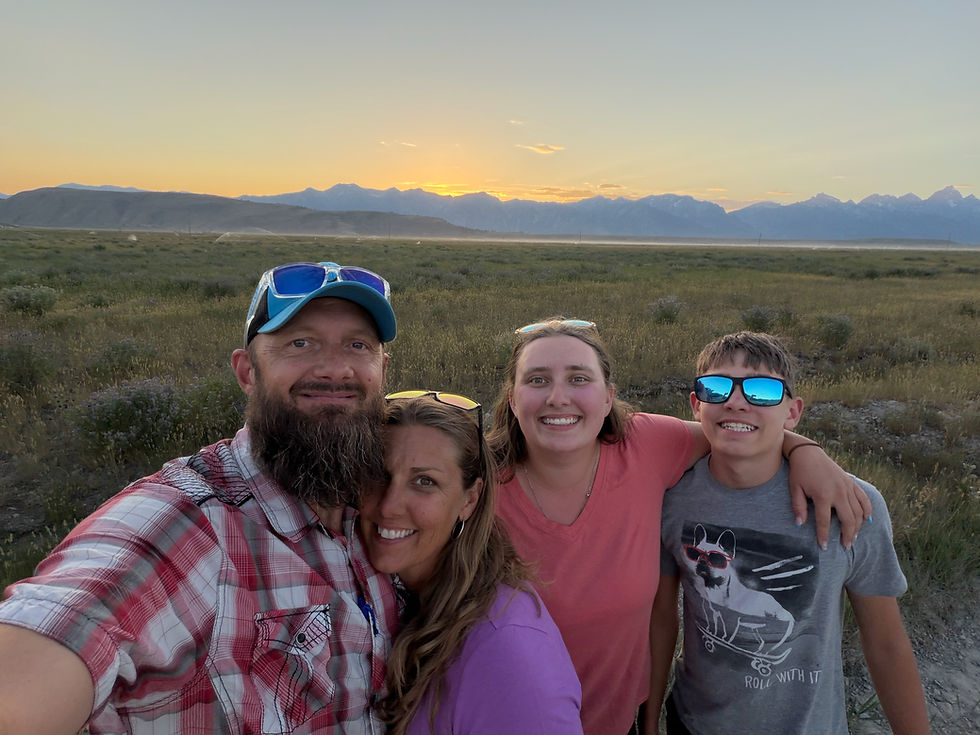
Whether it’s my husband working on a plumbing system that will be hidden behind walls for decades, making drinks at the coffee shop, or me standing in my kitchen rendering tallow for another batch of handcrafted skincare, the philosophy is pretty much the same:
Do it right—even when nobody will ever see the work that went into it.
That might be considered old-fashioned these days.
I’m okay with that.
There are plenty of shortcuts available in almost every industry. There are faster ways to produce things, cheaper ingredients to use and easier ways to get something out the door.
But there’s a difference between simply getting something done and being able to stand back afterward and say:
I’m proud to put my name on that.
Up at Dawn was never meant to be mass-produced
There is a certain rhythm to work that starts early.
Before the day gets loud, there is time to notice things. The way a material feels. The way a seam sits. The way one small adjustment can make the whole piece stronger, cleaner, or more comfortable to use. That attention is hard to protect when the goal is speed above all else.
Mass production has its place. It helps make many things affordable and available. But it also has limits. When the focus becomes volume, every decision starts to bend in that direction. Faster. Cheaper. More. Again and again.
We want a different pace.
Up at Dawn was built around care, not rush. That does not mean every step is slow for the sake of being slow. It means the pace serves the work. Some parts can be repeated. Some tools can help. Some systems make sense. But the final standard still comes back to human judgment.
Does it look right?
Does it feel right?
Would we be proud to hand it to someone face to face?
Those questions matter more than hitting some giant production number. A small batch made well carries more value than a large run made with indifference. That belief keeps us grounded.
It also keeps the work personal. Every piece that leaves us carries a little bit of the morning it was made in, the hands that checked it, and the standards that shaped it.
Maybe Wyoming has something to do with it
Wyoming has a way of teaching a person what lasts.
The weather can turn quickly. The wind does not ask permission. Distances feel real out here. A thing that works only when conditions are perfect will show its weakness soon enough.
That shapes how we think.
In a place like this, usefulness matters. Durability matters. Straight talk matters. People notice when someone does what they said they would do. They also notice when something is made poorly, because poor work usually fails when you need it most.
Wyoming does not reward fragile ideas for long.
Maybe that is why we are drawn to sturdy materials, simple design, and work that feels honest. Maybe it is why we respect people who fix what can be fixed, keep what can be kept, and pass down what still has life in it. There is a certain pride in owning fewer things that serve you better.
That mindset runs through Up at Dawn tallow.
We are not trying to make products that feel disposable. We are not chasing every passing trend. We are building with the belief that good things should earn their place. They should be used, carried, worn in, and remembered.
There is beauty in that. Not the polished kind that only looks good for a photo, but the kind that grows from real use. Scratches that tell a story. Edges that soften with time. Materials that do not pretend to be perfect, but prove they are dependable.
Wyoming reminds us that quality is not fancy. Quality is work done right.
Quality over quantity is still a choice
Every business says it cares about quality. The real proof shows up in the decisions that cost something.
Quality means saying no sometimes. No to shortcuts. No to rushing a batch that needs more time. No to materials that look fine at first but will not hold up. No to growing so fast that care gets pushed aside.
Those choices are not always easy. They can slow things down. They can make the path less predictable. They can limit how much gets made at one time.
But they also protect what matters.
A product made with care gives more than a quick first impression. It holds its shape. It feels considered. It builds trust quietly, through use. That trust is hard to earn and easy to lose.
Quality also respects the customer. When someone chooses to support small business, they are often choosing more than an item. They are choosing a set of values. They are choosing the story behind the work. They are choosing to believe that their dollars can support real people who care about what they make.
We take that seriously.
We would rather make fewer things and feel proud of them than make more things that do not meet the mark. That is not nostalgia. It is discipline.
The old-fashioned way does not mean refusing to grow. It means refusing to let growth strip the meaning out of the work. It means keeping standards close, even when easier options appear.

The people behind small businesses are the difference
Small businesses are built by people who carry the weight personally.
They answer the messages. They pack the orders. They fix the mistakes. They remember repeat customers. They celebrate the kind words and lose sleep over the problems. The work follows them home because the business is not some abstract machine. It is tied to their name, their family, their community, and their future.
That is why small business can feel different.
There is a level of care that comes from proximity. When the person making decisions also hears from the customer, standards stay real. Feedback does not disappear into a spreadsheet. It becomes part of the work.
Customers feel that. They know when they are dealing with someone who cares. They can tell when a note was written by a person, when packaging was handled with respect, when a problem was solved with honesty instead of a script.
Small business also keeps craft alive. It gives people a reason to learn skills, improve them, and pass them along. It creates room for judgment, taste, patience, and pride. Those things are hard to automate because they come from experience.
Behind every small business worth supporting, there are people making choices that shape the final product:
Which materials deserve to be used
Which details need more attention
Which standards cannot be lowered
Which promises must be kept
Which customers need a thoughtful response
None of that happens by accident.
It happens because people decide their work matters.
Some things are worth holding onto
Not every old way deserves to stay. Some habits fade for good reason. Better tools, safer methods, and new ideas can improve the work. We welcome that when it helps us make something better.
But some things are worth holding onto.
Pride in a job done right is worth holding onto. So is patience. So is knowing where something came from. So is the idea that a customer deserves more than a rushed product and a tracking number.
We want to hold onto the human part of making things. The part where touch matters. The part where judgment matters. The part where a name still carries weight.
That belief feels even more important in a world full of sameness. Many things are designed to be replaced quickly. They arrive fast, wear out fast, and disappear fast. It can make quality feel rare, which is exactly why it matters.
Choosing well-made goods is a quiet kind of resistance to throwaway culture. It says useful things should last. It says people should be paid for care and skill. It says a business can grow without becoming careless.
That is the kind of business we are trying to be.
Not perfect. Not flashy. Just steady, honest, and proud of the work.

Come be part of the herd 🦬
If you've been following Up at Dawn, purchasing our products, sharing our story or simply cheering this little Wyoming business on from afar—thank you.
The Herd is where I get to bring you a little closer.
Herd subscribers receive 10% off, along with behind-the-scenes looks at what I'm working on, first peeks at what's coming and opportunities to share your opinion as Up at Dawn continues to grow.
Because while I know the values I want this business to stand for, I also want to listen to the people who are actually using and loving these products.
There is a lot more to come.
And I'd love to have you along for the ride.
Welcome to The Herd.
-Stacey